The work behind the work.
Thoughts, insights and behind-the-scenes notes from the world of the interior design studio.
From SEO and systems to content, marketing and the countless tasks that keep a studio running, this is where we share practical advice, lessons learned and the things nobody tells you about running an interior design studio.
What I’d Do Differently If I Started My Studio Again
Starting an interior design studio is funny because you naturally spend a lot of time thinking about the visible bits.
The branding.
The website.
The Instagram grid.
How the proposals look.
What you don’t necessarily think about is:
How is this business actually going to work?
Why I Think Pinterest Is Underrated For Interior Designers
If I told an interior designer they should be posting consistently on Instagram, I don't think anyone would be particularly surprised.
If I told them to put more time into Pinterest?
I suspect quite a few would say:
“I know I should probably do something with Pinterest...”
And then continue ignoring it.
Going Into Q4 With No Plan? This Is Where I’d Start
September has a slightly strange energy when you run your own business.
Summer is over. Christmas suddenly doesn’t feel that far away. Everyone starts talking about Q4 plans, targets, launches and finishing the year strong.
And maybe you’re sitting there thinking:
I don’t even know what I’m posting next week.
If I was heading into Q4 feeling completely lost, I wouldn’t start with a huge strategy document or try to reinvent my entire business before Christmas.
I’d start by working out what actually needs my attention.
Productivity, But Not The Way You Know It: Go For A Walk
When we talk about productivity, we usually talk about doing.
Time blocking.
To-do lists.
Automations.
Getting through the inbox.
Finding another 30 minutes.
Making everything more efficient.
And I love a system as much as the next person. My Google Calendar can confirm.
But I think there’s another version of productivity that we don't talk about enough.
Go for a walk.

Before Q4 Gets Busy, I’d Do These Things Now
September always feels like there’s loads of time left in the year.
And then somehow it’s November.
If I knew Q4 was going to be busy, I wouldn’t spend September trying to get more into the diary.
I’d use it to make the busy period easier.
How I Turn A Client Call Into Scheduled Tasks Using AI
There’s one thing I don’t need after a client meeting:
Another page of notes to deal with.
Meeting notes are useful, obviously. But what I really want to know when I finish a Studio Sidekick call is:
What actually needs to happen next?
So I’ve started building a really simple AI workflow behind the scenes at Studio Sidekick that takes me from client call → meeting notes → actions → actual scheduled work in my diary.
It looks like this.
Why I Plan My Day Before I Open My Inbox
I used to open my inbox first thing in the morning.
Which sounds completely normal.
Except I’ve realised that the second I do that, I’ve basically handed my to-do list over to everyone else.
A supplier needs something.
A client has a question.
A delivery date has changed.
Someone needs a “quick” reply.
There’s an invoice to check.
And suddenly it’s 11am and I’ve spent the whole morning being incredibly busy — just not necessarily doing what I actually needed to do.
So now I try to do something differently.
Before I open my inbox, I look at my calendar.

Nobody Tells You You're Starting Two Businesses
When you decide to start an interior design studio, you think you're starting one business.
A design business.
You imagine client meetings, mood boards, sourcing beautiful furniture, selecting finishes and seeing projects come to life.
And yes—that's part of it.
But what nobody really tells you is that you're actually starting two businesses.
The first is an interior design studio.
The second is everything else.
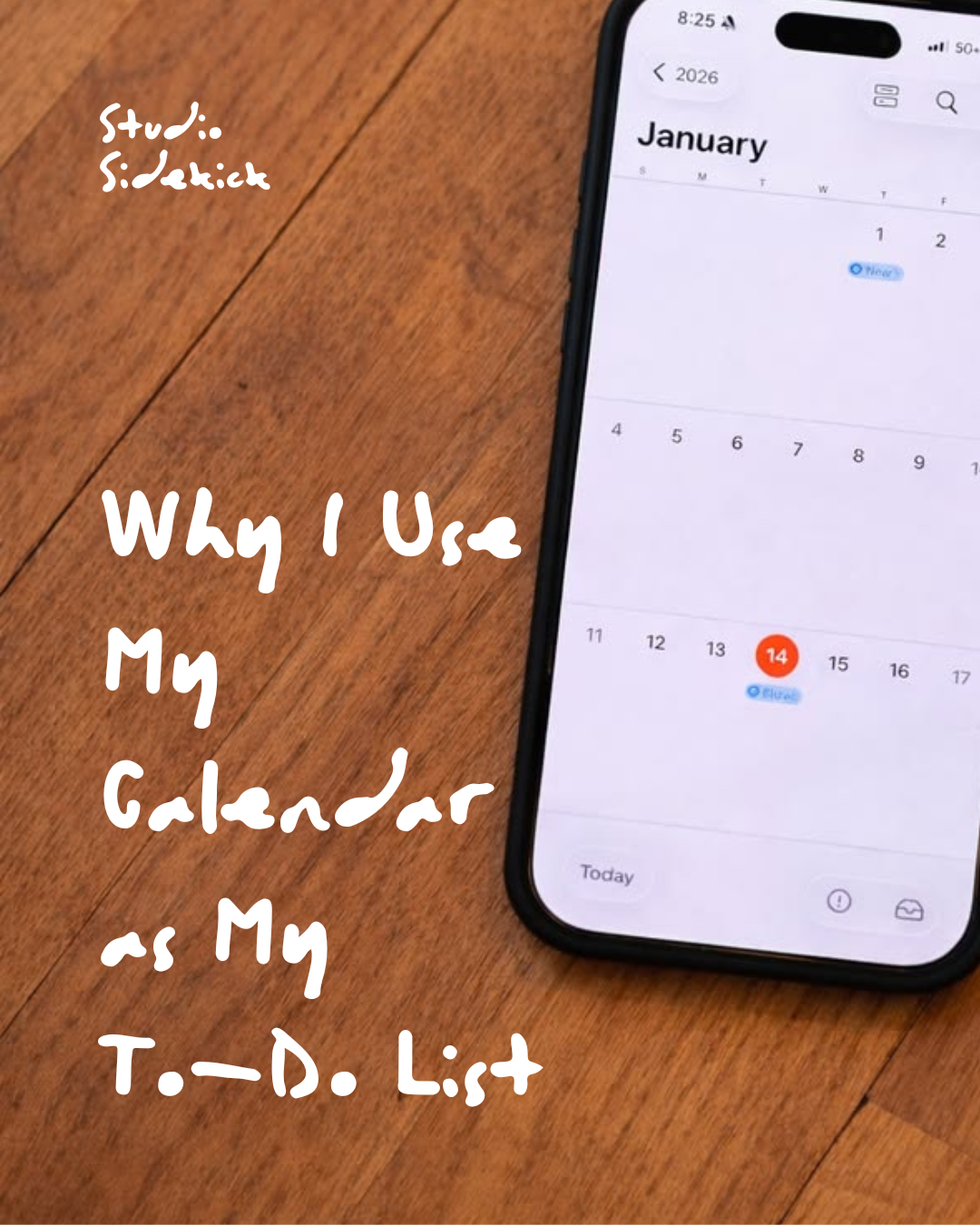
Why I Use My Calendar as My To-Do List
I've tried the to-do lists.
The notebooks.
The apps.
The beautifully organised productivity systems that inevitably become another thing I need to remember to check.
And I've realised that the simplest system works best for me:
My calendar is my to-do list.
The “I’ll Do It When Things Calm Down” List
Every interior designer has one.
The list of things you’ll get around to when things calm down.
Update the website.
Upload that finished project.
Sort out the Google Drive.
Start Pinterest properly.
Write the case study.
Ask for the testimonial.
Fix the enquiry form.
Plan next month’s content.
Look at the SEO.
Finally organise those project folders.
The only slight problem?
Things never really calm down.

Your Website Isn't Finished (And It Never Will Be)
There comes a point in almost every interior designer's business where the website gets ticked off the list.
The branding is finished.
The photography has been uploaded.
The copy has been written.
You hit publish.
And then…
You don't really look at it again.
The Interior Designer's Marketing Checklist: 12 Things to Review Every Quarter
Running an interior design studio means you're constantly looking ahead.
The next site visit.
The next client presentation.
The next installation.
The next deadline.
It's no surprise that your own marketing often slips down the priority list.

You're Not Overwhelmed Because You're Bad At Running A Business
If you've ever finished a working day wondering why you didn't actually get any design work done...
You're not alone.
You Don't Need More Content. You Need More Mileage From The Content You Already Have.
If you're an interior designer, chances are you've had this thought at least once this month:
"I really need to post something on Instagram."
Maybe you open the app. Scroll for a few minutes.
Look through your camera roll. Decide you don't have anything worth sharing.
Close the app.
Promise yourself you'll post tomorrow instead. Sound familiar?
You're not alone.

The Interior Designer's Mid-Year Business Check-In
If you're anything like most interior designers I speak to, January feels both five minutes ago and a lifetime ago. Projects have moved forward, deadlines have shifted, clients have come and gone, and somewhere along the way your carefully planned goals for the year may have ended up buried underneath supplier emails and site visits.
So before we race into the second half of the year, this is your reminder to pause for an hour and check in with the business side of your studio.

The Hidden Cost Of Doing Everything Yourself
Most interior designers don't have a time problem.
They have a capacity problem.
On paper, it often looks like a time issue.
Too many emails.
Too many projects.
Too many admin tasks.
But underneath all of that is usually something else:

Why Your Portfolio Isn't Doing As Much Heavy Lifting As You Think
Most interior designers treat their portfolio as their primary marketing tool. And that makes sense. Your portfolio showcases your projects, demonstrates your style, and gives potential clients a glimpse into what it's like to work with you.
The problem?Most potential clients aren't searching for portfolios. They're searching for answers.

The Marketing Tool Most Interior Designers Already Own (But Aren't Using Properly)
The truth is, your website should be working long after you've put your phone down for the evening. It should be attracting visitors, answering questions, building trust and helping potential clients find you through search engines.

Instagram just changed how it measures success. Here's what that means for your studio
Instagram has officially shifted its primary performance metric from likes and follower counts to Views - and it's a change worth understanding if you're using the platform to attract clients.

Google Just Changed. Here's What It Means for Your Interior Design Studio.
Because something bigger than a routine update is happening. Google has officially moved to an AI-first search experience. And the rules around how your studio gets found online have quietly, significantly shifted.